By George Thomas, Regional Support Specialist at Cochrane Supply & Engineering
Building automation is rapidly evolving toward IP-based networks, real-time data, and cloud-connected systems. One of the most consistent barriers seen in the field, however, continues to be the wiring.
Most buildings weren’t designed for today’s Ethernet-based systems. Upgrading often means running new cable across the facility—opening ceilings, cutting into walls, and disrupting operations. In many cases, it also means relying heavily on the customer’s IT network.
In real-world retrofit projects, this is often where progress slows—or stops entirely.
A newer technology—10BASE-T1L (T1L)—is beginning to change that.
T1L makes it possible to reuse existing twisted-pair control wiring while enabling modern Ethernet communication, creating a more practical path to upgrade legacy systems without major disruption.
The Hidden Asset Already in Your Building
Most buildings already have thousands of feet of twisted-pair wiring installed for control networks such as:
- BACnet MS/TP
- Modbus RTU
- RS-485 field buses
- Proprietary controller networks
These systems were designed decades ago for simple control and low-speed communication. While they’ve proven reliable, they limit how much data can move across the network and make integration with modern IT systems more complex.
The key point:
The wiring itself is often still fully usable.
T1L allows that existing infrastructure to be repurposed into an Ethernet network.
What Is 10BASE-T1L?
10BASE-T1L is an Ethernet standard defined by IEEE 802.3cg. It enables Ethernet communication over a single twisted pair of wires, designed specifically for long-distance building and industrial environments.
Key capabilities include:
- 10 Mbps Ethernet communication
- Up to 1,000 meters (3,280 ft) reach
- Native Ethernet/IP communication
- Works with shielded or unshielded single twisted pair (18–22 AWG)
- Reliable operation in industrial environments
In practical terms, Ethernet can now run over the same type of wiring already installed throughout many buildings.
Technologies like this are being advanced by manufacturers such as Honeywell, helping bridge the gap between legacy infrastructure and modern IP-based systems.
Why This Matters for Building Automation
T1L provides something the industry has needed for years:
A bridge between legacy field wiring and modern Ethernet networks.
Instead of replacing cable infrastructure, facilities can reuse existing wire while upgrading to Ethernet-based systems—fundamentally changing the economics of modernization.
Lower Upgrade Costs
Running new Ethernet cable across an existing facility is often one of the most expensive parts of a BAS upgrade.
By reusing existing twisted-pair wiring, T1L can significantly reduce:
- Installation labor
- Construction work
- Material costs
- Project timelines
For many buildings, this is the difference between a project being delayed—or moving forward.
Less Disruption to Operations
Anyone who has worked on a retrofit project understands the challenge:
- Opening ceilings
- Working around tenants
- Scheduling shutdowns
- Coordinating multiple contractors
Because T1L uses the wiring already in place, upgrades can be completed with far less disruption to building operations.
Why BAS Contractors Should Pay Attention Now
For years, BAS installations have relied on serial networks like BACnet MS/TP and Modbus RTU over RS-485. These systems remain reliable—but they were built for a time when buildings required far less data and connectivity.
Today’s expectations are very different.
Owners now expect:
- More sensors and connected devices
- Real-time analytics
- Cloud connectivity
- Remote monitoring
- Stronger cybersecurity
- Integration with enterprise IT systems
These demands are pushing building networks toward Ethernet and IP-based communication.
The challenge has always been how to extend Ethernet to the field level without replacing the building’s entire wiring infrastructure.
This is where T1L becomes important.
The Retrofit Opportunity
Most BAS work is not new construction—it’s modernization.
Millions of commercial buildings already have extensive twisted-pair wiring installed. Replacing all of that cable with Ethernet infrastructure can significantly increase project costs and often makes upgrades financially unrealistic.
T1L changes that equation.
Because it runs Ethernet over a single twisted pair, it allows contractors to deliver modern connectivity using existing infrastructure—often determining whether a project moves forward at all.
Ethernet Is Moving to the Edge
Traditional BAS architecture typically looks like:
Enterprise Network → BAS Server → Field Controller → Serial Fieldbus → Devices
The industry is steadily moving toward Ethernet everywhere, where devices communicate directly over IP networks.
T1L enables this by extending Ethernet communication up to 1,000 meters over a single twisted pair.
This allows devices such as:
- Sensors
- Actuators
- Field controllers
- Smart equipment
to function as native Ethernet devices, rather than relying on serial networks.
The result is simpler network design and easier integration with modern building platforms.
Product Spotlight: T1L in Action
Honeywell 10BASE-T1L Media Adapter
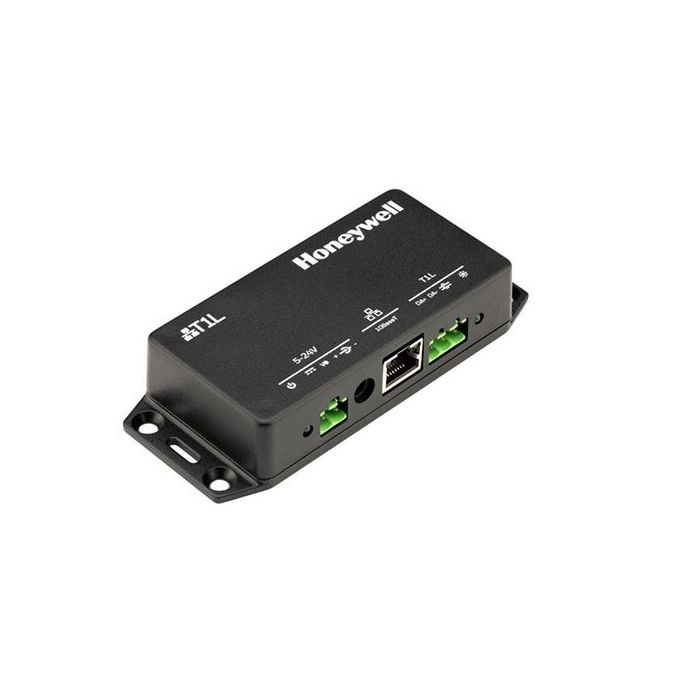
Enables seamless integration between Ethernet and T1L field wiring
- Converts 10BASE-T (RJ45) to 10BASE-T1L over single twisted pair
- Plug-and-play operation with no configuration required
- Supports up to 1,000 m communication distance
- Works with existing 2-wire BAS cabling
- Ideal for extending Ethernet networks into legacy infrastructure
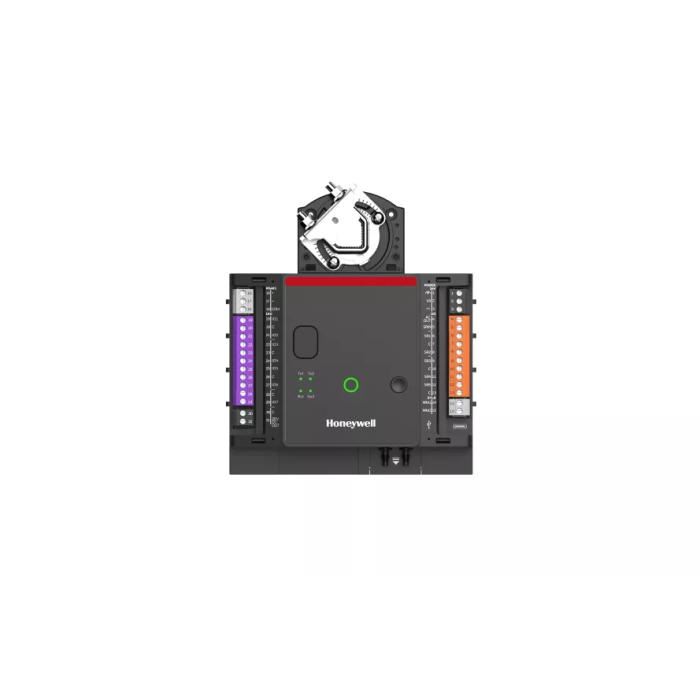
Honeywell Optimizer VAV Controller
Brings native IP connectivity directly to field devices
- Supports long-distance T1L networks up to 1,000 m
- Supports BACnet/IP, including BACnet/IP over T1L
- Enables higher bandwidth and faster commissioning vs MS/TP
- Communicates over single twisted pair wiring (T1L)
- Integrated actuator, airflow sensing, and control
The Future Is IP-Based
Manufacturers across building automation and industrial markets are investing heavily in Single Pair Ethernet technologies like T1L.
These technologies are designed for:
- Industrial automation
- Process control
- Smart infrastructure
- Intelligent buildings
The transition will not happen overnight—but it is already underway.
Those who understand how to design and deploy these networks will be better positioned as adoption continues to grow.
The Bottom Line
10BASE-T1L represents one of the most meaningful shifts in building network infrastructure in decades.
It creates a bridge between:
- Legacy control wiring
- Modern Ethernet-based systems
For contractors and building owners, this means the ability to deliver:
- Smarter building networks
- Lower upgrade costs
- Simpler architectures
- Stronger integration with enterprise systems
In an industry where most buildings are decades old, the ability to turn existing wiring into a modern Ethernet network is a clear advantage.
Contact your sales representative today to learn more!
About the Author
George Thomas is a Regional Support Specialist at Cochrane Supply & Engineering, working closely with contractors and customers to support building automation system design, troubleshooting, and modernization projects.